

French Drain Installation Richmond: Yard Drainage Solutions for Standing Water & Wet Areas
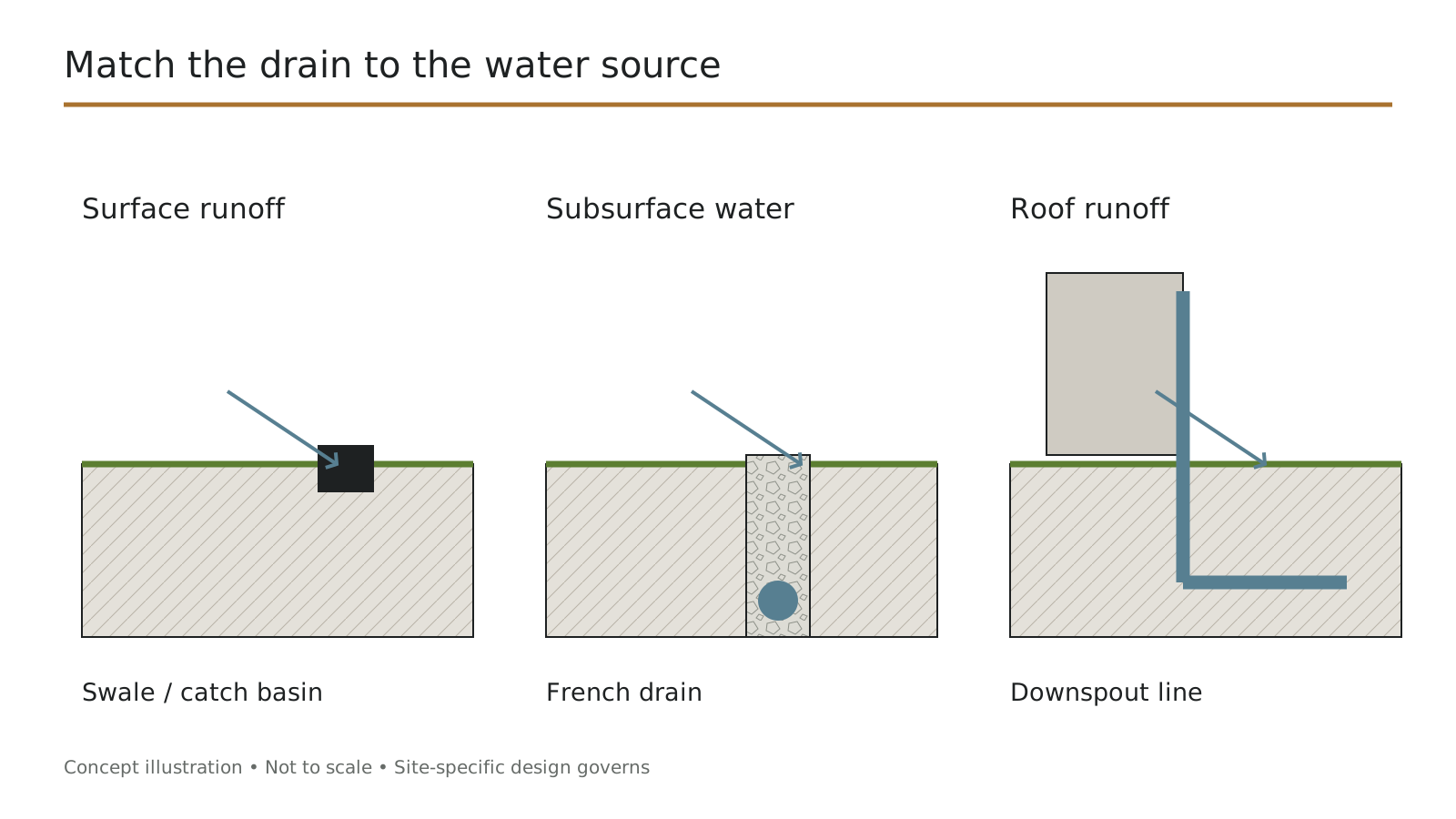
Wet yards have three sources. Surface runoff sheets across from higher ground. Subsurface water moves through the soil. Roof water dumps at downspouts. Each needs a different fix.
- French drains handle subsurface water in the soil
- Catch basins and channel drains handle concentrated surface runoff
- Buried downspout lines move roof water away from the foundation
- Every system needs a discharge point with enough fall
This page covers drainage across the yard. For drainage specifically behind a retaining wall, see retaining wall drainage.
A French drain fixes subsurface water. If your problem is roof water or runoff sheeting across the lawn, a French drain is the wrong tool. We diagnose the source first and install what actually matches it.
Wet yard or water at the foundation?
Contact us today to schedule a free on-site yard drainage estimate. Tell us where water sits, for how long and after what kind of rain.
Start your free yard drainage estimate or call (804) 409-8197
Choosing Between French Drains, Catch Basins & Regrading
The right drainage system follows the source of the water and the fall available to carry it away. French drains collect water from the soil, curtain drains intercept it on a slope, and catch basins handle surface runoff. Sometimes regrading alone solves it, and we tell you when.
- French drain. Perforated pipe in a gravel trench wrapped in fabric, collecting water from the soil.
- Curtain drain. A French drain across a slope, intercepting water from uphill.
- Catch basin. A grated box collecting surface water at a low point.
- Channel drain. A linear grate across driveways and patios.
- Downspout lines. Solid pipe carrying roof water to a safe outlet.
- Dry well. An underground chamber where no gravity outlet exists.
Outlets decide everything. A drain needs somewhere lower to send water: the street, a ditch, a lower part of the lot, or a dry well. On flat lots in Sandston, Highland Springs and Mechanicsville, finding that outlet is often the whole design problem. We shoot elevations before promising a gravity system.
Yard Drainage & French Drain Costs in Richmond, VA
Drains are priced per linear foot by depth, with basins, dry wells and restoration as separate items. Where the outlet is changes the price most. Lawn restoration is included.
| Item | Unit | Planning range | Notes |
|---|---|---|---|
| French drain | Per linear ft | $25 – $60 | By depth and restoration |
| Downspout line | Per linear ft | $15 – $35 | Solid pipe |
| Catch basin | Each | $250 – $600 | Plus pipe |
| Dry well | Each | $900 – $3,000 | No gravity outlet |
| Sump and pump | Each | $1,800 – $5,000 | Where water must be lifted |
Planning ranges based on published 2026 national cost averages for comparable work (HomeGuide, HomeAdvisor), not quotes. Last reviewed: September 2026.
Three common situations
A short drain to a daylight outlet at the back of the lot is the least expensive. A full backyard system with several branches costs more. A system with no gravity outlet, needing a dry well or a pump, costs the most. We tell you which you have before quoting.
How We Investigate, Trench, Install & Restore
- 1
Investigate
We check the water's source, the soil it's moving through and how much fall is available.
- 2
Design
We choose the drain type, its route and where the outlet goes.
- 3
Utility locating
We call Virginia 811 and have private lines marked too.
- 4
Trench
We dig to the right depth and pitch the trench to the outlet.
- 5
Install
We install fabric, gravel, pipe and any basins to the design.
- 6
Outlet
We tie the outlet to daylight, a dry well, a pump or a legal connection.
- 7
Restore
We backfill the trench, replace the topsoil and reseed the lawn.
Finding a Discharge Point & Protecting Neighboring Property
Water has to go somewhere, and it cannot become someone else's problem. We choose the outlet before designing the rest.
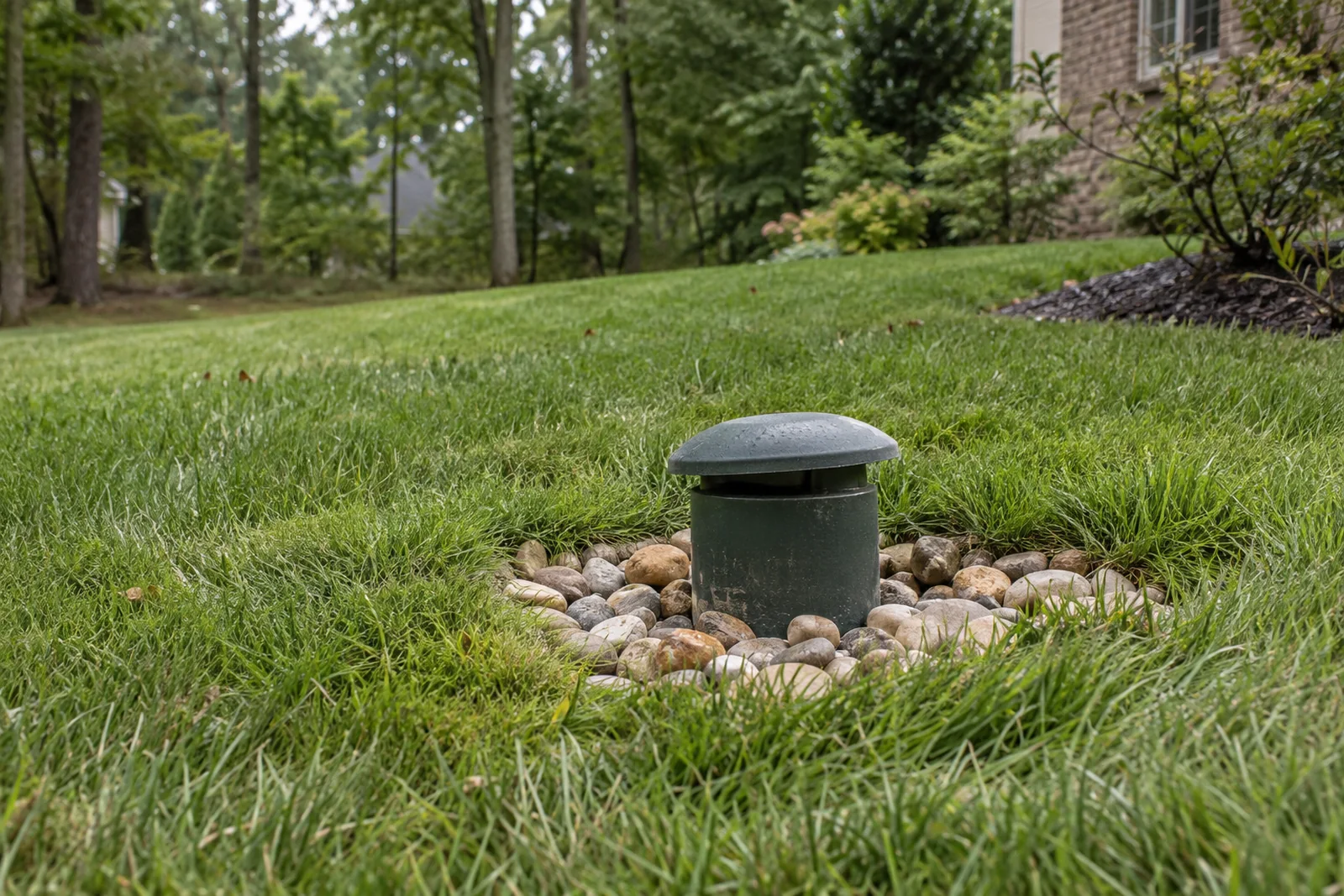
- Daylight outlets. Pipe exits at a lower point with erosion protection.
- Street and curb. Some localities allow curb outlets; others do not.
- Storm systems. Connections need locality approval.
- Neighbors. Discharge is not concentrated onto adjacent lots.
- Maintenance. Outlets and basins kept clear of debris.
Concentrating water onto a neighbor's yard is the fastest way to turn a drainage fix into a dispute. We keep discharge on your property or route it to an approved outlet, and we explain the route before digging.
Stormwater Discharge Rules & Permit Requirements in Richmond, VA
Most residential drainage needs no permit, but discharge rules still apply. Localities control connections to streets and storm systems, and water can't be diverted onto a neighbor's property. We confirm where your water is allowed to go before we design the system.
- Discharge. Localities set rules on connecting to streets and storm systems.
- Neighbor drainage. Water may not be diverted onto adjacent property.
- Utilities. Virginia 811 notice is required before any excavation. The marking period runs to 7:00 AM on the third working day after notice, and digging within two feet of a mark is done by hand. Private lines to sheds, lights, irrigation and pumps are not marked and have to be identified with the owner.
- Land disturbance. Virginia regulates land-disturbing activity at 10,000 square feet generally and at 2,500 square feet in Chesapeake Bay Preservation Areas, and localities can set lower thresholds.
- Buffers. Outlets near streams may fall within resource protection buffers.
We confirm current thresholds with the building office for your address before quoting. Detail by jurisdiction is on our permits and requirements page.
Yard Drainage FAQs
Why is a dry well sometimes needed on flat Richmond-area lots?
Flat ground in Sandston or Highland Springs can have no downhill point for a gravity outlet at all, so a dry well or pump becomes the only option.
Does Richmond-area clay in Midlothian and Bon Air change how drains are built?
Yes, Piedmont clay drains slowly, so we typically space drains closer together and use a more generous gravel bed than we would in sandy soil.
How deep does a French drain need to be?
Deep enough to intercept the water, often one to three feet, pitched to the outlet.
Can the drain discharge into the street or storm sewer?
Sometimes, with locality approval. We check before designing.
Will my lawn recover from the trenching?
Yes. We replace topsoil and reseed or sod.
How long do French drains last?
Decades with fabric that keeps soil out of the gravel.
What if there is nowhere downhill to send the water?
A dry well or a sump and pump.
Request a Free Yard Drainage Estimate
We diagnose the source first and install what actually matches it. We measure the site, explain what the ground needs, and give you a written price with every line item shown.
- Source diagnosed first
- French drains and catch basins
- Dry wells where needed
- Lawn restored
Serving Richmond, Henrico, Chesterfield and Hanover, plus Petersburg, Hopewell, Colonial Heights, Powhatan, Goochland and Prince George County.