
Retaining Wall Repair Richmond: Options for Leaning, Cracked, Bulging & Settling Walls
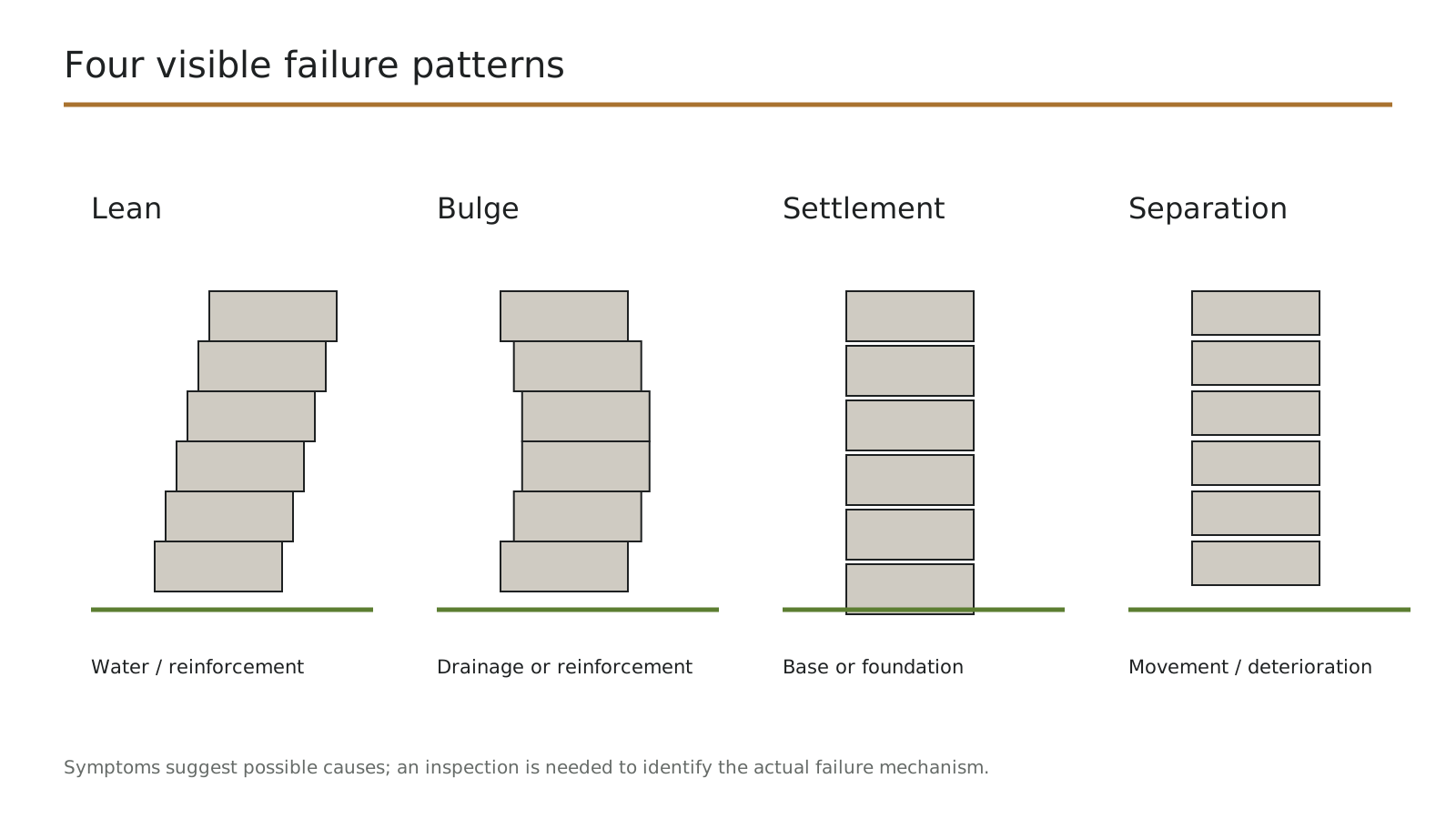
Retaining walls fail in recognizable patterns, and the pattern tells you a lot about the cause. Before we price anything we work out which one you have, because the repair for a drainage failure and the repair for a base failure share almost nothing.
- Leaning at the top usually points to water pressure or missing reinforcement
- Bulging in the middle usually points to drainage that has stopped working
The Richmond metro has a specific repair profile driven by when its neighborhoods were built. Timber and railroad tie walls installed from the 1970s into the 1990s are now well past their service life, and whole streets in Tuckahoe, Dumbarton and Brandermill are reaching that point together. Block walls from the 1990s subdivision boom in Midlothian and Chester are hitting the age where original drainage silts up. Older masonry in the Richmond city core and in Petersburg fails differently again, through mortar rather than movement.
We find the cause before pricing the repair. A wall that moved because its drain outlet silted shut needs a different scope from one that moved because its base was built on unsuitable fill, even when they look identical from the street.
Retaining Wall Maintenance, Cleaning & Sealing in Richmond, VA
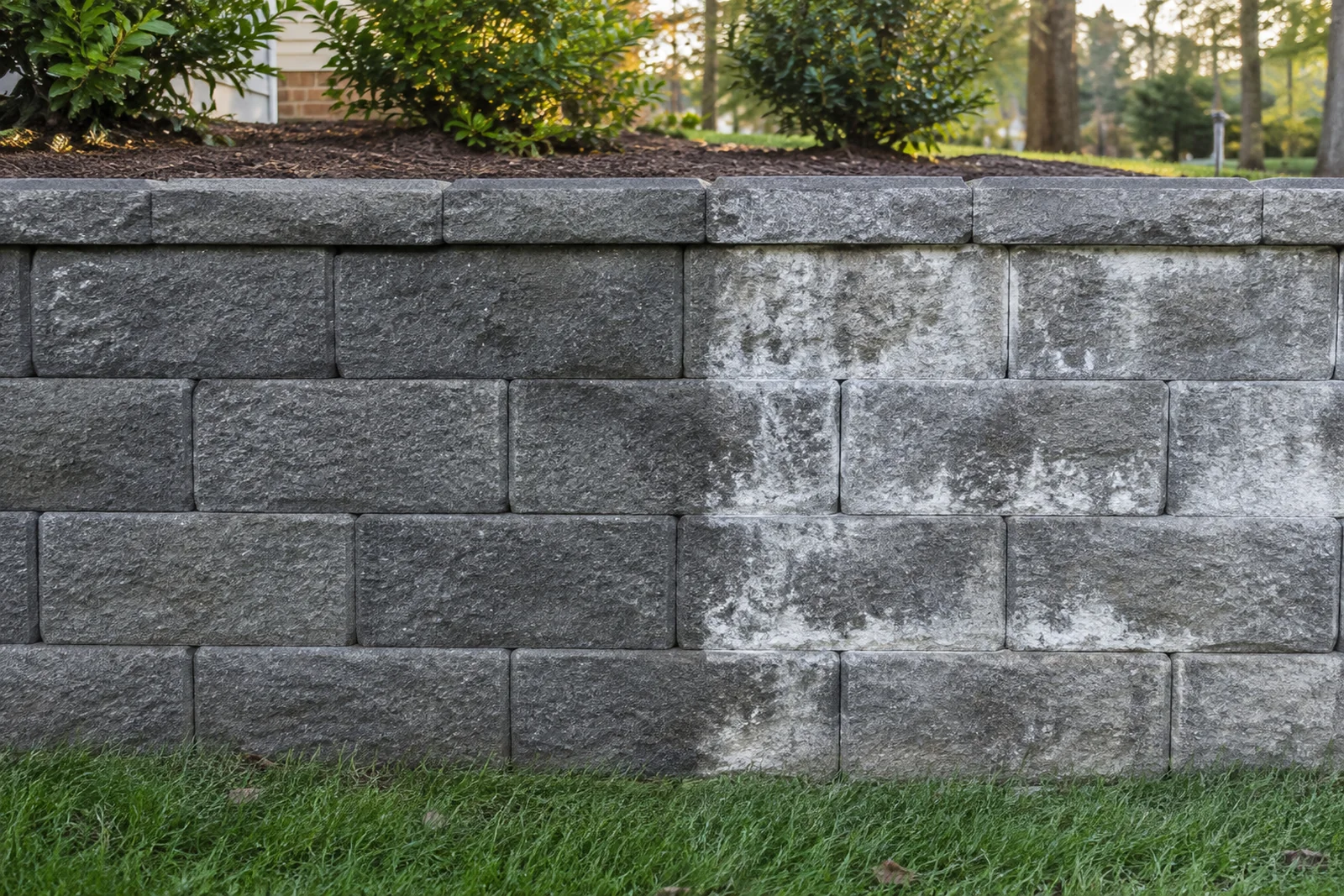
Maintenance covers a short, practical list. Washing organic growth and staining.
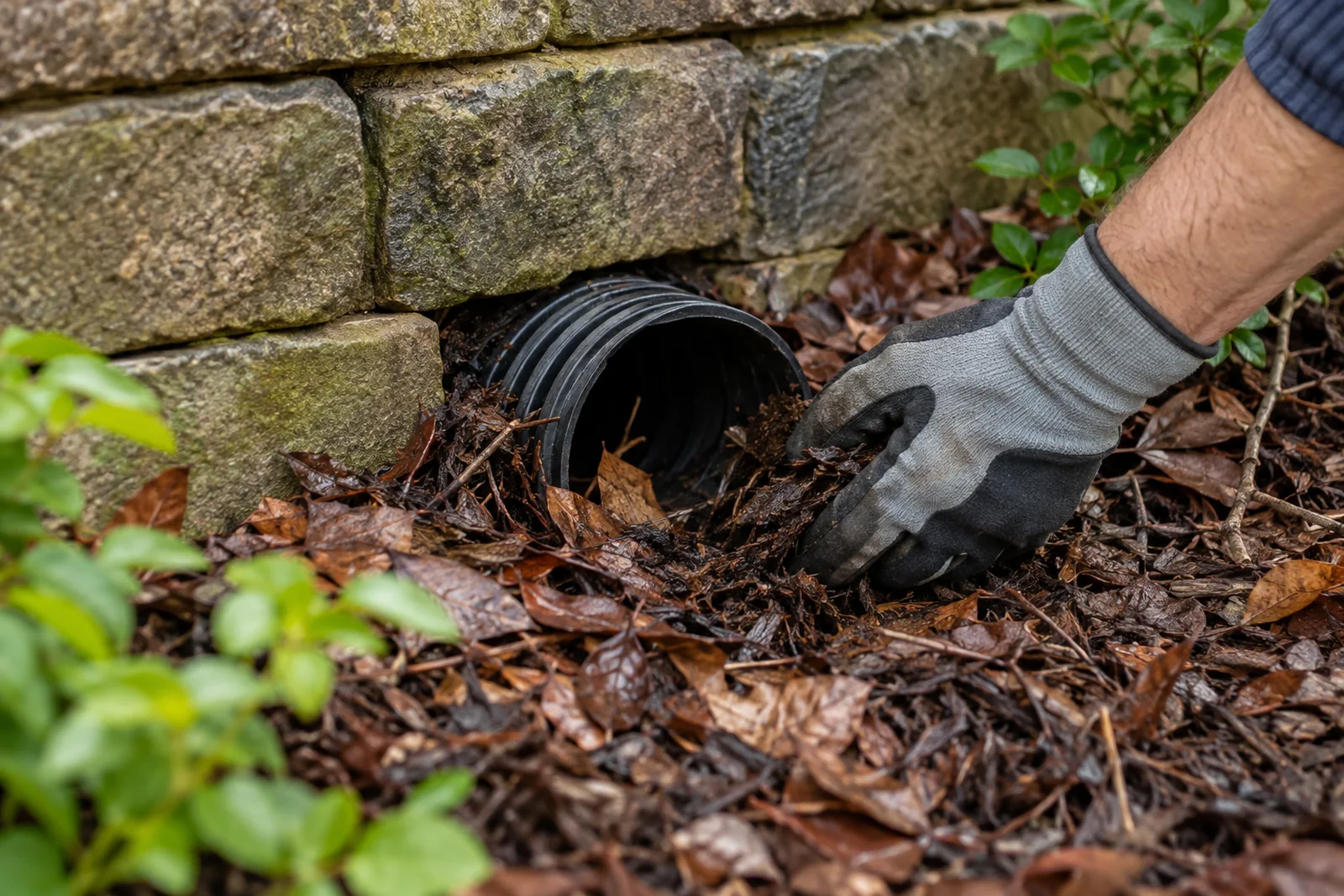
- Clearing a silted drain outlet is the cheapest failure prevention there is
- Cleaning method is set by the wall material, not by what is convenient

Planning retaining wall maintenance, cleaning & sealing
Method follows material.
- Segmental block. Tolerates washing well at moderate pressure. Excessive pressure erodes the face texture that gives the unit its appearance, and that is not reversible.
- Natural stone. Varies enormously by stone type. Soft sedimentary stone is damaged by pressure that hard igneous stone shrugs off. We identify the stone before choosing a method.
Retaining Wall Maintenance, Cleaning & Sealing cost
| Service | Unit | Planning range | Notes |
|---|---|---|---|
| Wall cleaning | Per sq ft of face | $1.00 – $3.00 | Method and pressure set by material |
| Sealing | Per sq ft of face | $1.50 – $4.00 | Penetrating or film-forming, product specified |
| Efflorescence treatment | Per sq ft of affected area | $1.50 – $4.50 | Plus investigating why water is moving through |
Planning ranges based on published 2026 national cost averages for comparable work (HomeGuide, HomeAdvisor), not quotes. Last reviewed: September 2026.
What to plan around
Three recurring maintenance items account for most of what actually matters.
- Finding the outlet. Many homeowners do not know where theirs is, and a significant number of walls were built without one. Establishing whether yours exists is the first question.
- Why they block. Silt migration from unfiltered aggregate, root intrusion from nearby planting, and burial under mulch, leaf litter or a later landscaping change. In wooded areas leaf litter alone does it within a few seasons.
Is your wall leaning, bulging or sinking?
Contact us today to schedule a free on-site retaining wall repair estimate. Send photos of what the wall is doing and we will tell you what it probably means.
Start your free retaining wall repair estimate or call (804) 409-8197
Finding the Cause Behind Your Retaining Wall Damage
Every repair assessment works through the same few questions, in this order. The shape of the damage points to the cause, and the cause decides the fix. We start with the drain outlet, because a blocked drain is behind more failures than anything else.
- Where the water goes. We look for the outlet first. A retaining wall drain that has silted shut, rooted over or was never given a real outlet is the single most common cause we find. Water behind a wall is enormously heavy and walls are not designed to hold it.
- What the base is sitting on. Settlement at one end, a dip in the top course or a wall that has rotated forward as a unit all point downward. We check what the base was built on and whether it is still there.
Soil behavior differs across this metro in ways that matter for diagnosis. Shrink-swell clay in the Triassic basin ground around Midlothian stresses walls through seasonal moisture cycles. Coastal Plain sand out east migrates into poorly filtered drainage aggregate and clogs it. Same symptom on the surface, different mechanism underneath.
What Does Retaining Wall Repair Cost in Richmond, VA?
Repair pricing spreads much wider than new construction, because the scope depends on a cause you cannot see from the street. These are planning ranges by repair type.
| Repair type | Typical scope | Planning range | Notes |
|---|---|---|---|
| Condition assessment | Site visit, findings, photos, options | $150 – $450 | Often credited toward the work |
| Drainage retrofit, accessible | Outlet clearing, new discharge route | $900 – $3,500 | Cheapest real fix when it is the actual cause |
| Drainage retrofit, wall opened | Partial removal, new aggregate and pipe, rebuild | $2,700 – $8,400 | Priced per linear foot of wall opened |
| Section rebuild | Take down and rebuild the affected run plus margin | $35 – $95 per face sq ft | Includes correcting the original cause |
| Cap and course re-securing | Reset shifted units, re-adhere caps | $18 – $45 per linear foot | Cosmetic, only where nothing structural is moving |
Planning ranges based on published 2026 national cost averages for comparable work (HomeGuide, HomeAdvisor), not quotes. We do not price repairs from photographs. Last reviewed: September 2026.
Why we will not quote a repair sight unseen
Two walls with identical cracking can need a $1,200 drainage fix and a $22,000 rebuild. The difference is underground. Anyone giving you a firm repair number over the phone is either guessing high to protect themselves or guessing low and planning to revise it once the excavator is already on your lot.
How We Assess the Damage & Complete the Repair
- 1
Assessment visit
We measure the movement, look at drainage, check the base where we can, and identify the loading above the wall.
- 2
Written findings
What is happening, why, whether it is active, and what your options cost. In writing, with photos, usable with an insurer or an HOA board.
- 3
Scope definition
We set the repair boundary by where the cause reaches. That is usually wider than the visible damage and it is why cause-based repairs hold.
- 4
Selective demolition
Only what has to come out comes out. We stage it so the retained soil stays supported while we work.
Matching Existing Materials & Defining the Repair Area
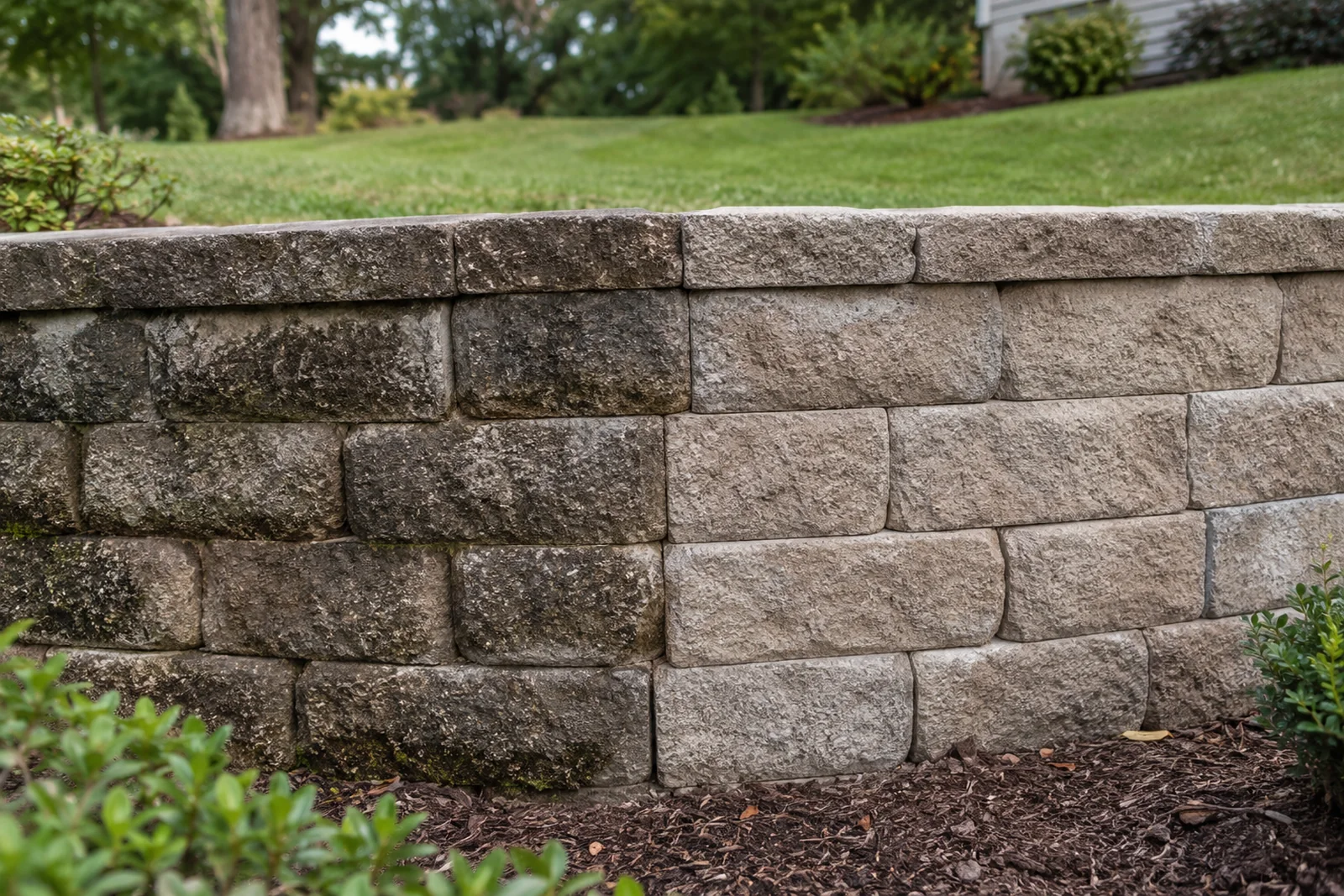
- Can the material be matched? Sometimes exactly, often closely, occasionally not at all. Block manufacturers discontinue colors and face textures, and a wall built in 1998 may use a unit nobody makes. We bring samples and show you the honest options, including blending the new run rather than pretending it will be invisible.
- Where does the repair stop? We extend past the visible damage to where the cause reaches, which typically means several feet of sound wall comes out too. That feels wasteful and it is the difference between a repair and a re-repair.
When Wall Movement Requires Engineering or Permit Review
- Like-for-like repair. Resetting caps, re-adhering units and clearing a drain outlet is maintenance. It generally does not trigger review.
- Rebuilding a run. Once a section comes down to the base and goes back up, many localities treat it as construction. At the state level the Virginia Uniform Statewide Building Code exempts walls supporting less than three feet of unbalanced fill, with the surcharge exception noted on our permits page.
Retaining Wall Repair & Maintenance FAQs
Are Richmond-area retaining walls prone to a particular kind of failure?
The most common cause we find is a blocked drain outlet, especially in wooded neighborhoods like Brandermill and Tuckahoe where leaf litter silts up an outlet within a few seasons.
Do you repair walls in historic Richmond neighborhoods?
Yes, including brick and stone walls in the Fan and Church Hill that are decades or a century old. Those get assessed for mortar failure separately from structural movement, since the fix is different.
Can a leaning wall be straightened?
Sometimes, and it depends on how it is leaning. A wall that has rotated forward as a unit on a failed base is a different problem from one bulging in the middle from water pressure.
Can one section be rebuilt instead of the whole wall?
Often yes. We define the repair area by where the cause reaches, not by where the damage is visible, which usually means going a few feet past the obvious problem.
Will sealing a crack solve the problem?
No. A crack in a retaining wall is a symptom of movement, and sealing it hides the symptom while the movement continues.
How do I know if my wall is still moving?
Mark it and watch it. A pencil line across a joint, a photo from a fixed spot, and a date.
My wall is bulging in the middle. Is that urgent?
Treat it seriously. A mid-height bulge usually means water is loading the wall faster than it can drain. Keep weight off the ground above it, keep people away from the base, and get it looked at. If it is moving visibly, call us and see our page on replacement.
Request a Free Retaining Wall Repair Estimate
- Cause found before pricing
- Written findings with photos
- Section repairs where they last
- Annual maintenance plans