
HOA Retaining Wall Contractor Richmond: HOA & Multifamily Retaining Wall Services
Community walls line entrances, parking areas, ponds, common grounds and building pads. Most were built when the community was, which means they reach the end of their life together.
- A community-wide assessment lets boards plan instead of react
- Each wall gets its own scope and price
- Work can be phased across budget years
- Resident access, parking and notices are part of the plan
Brandermill, older Midlothian and Chester subdivisions, and apartment communities across Henrico and Chesterfield all have original walls, often timber, now past their design life. Boards are usually dealing with one failure while several more are on the way.
We help boards avoid the emergency in the first place. A condition assessment of every wall, with costs and priorities, turns a series of surprises into a plan the reserve study can carry.
Is your community facing aging walls?
Contact us today to schedule a free community wall assessment. Tell us how many walls and where they are.
Start your free community wall assessment or call (804) 409-8197
Evaluating Wall Conditions, Material Matching & Resident Access
An assessment looks at each wall and at how the community uses the space around it. We record leaning, rot, drainage failure and settlement, then rank every wall by its risk to parking, walkways and buildings. That ranking turns emergency repairs into a plan the board can budget.
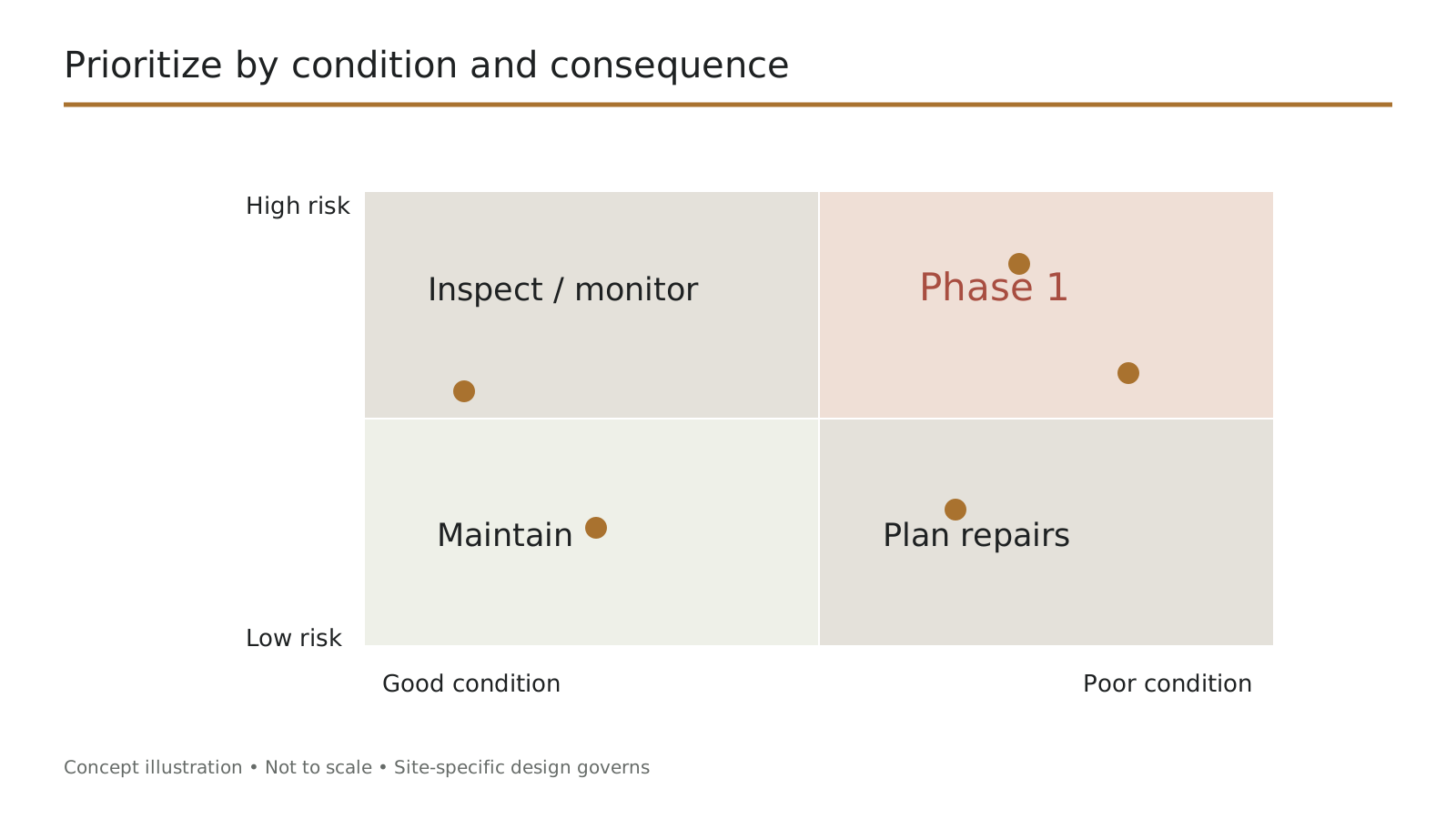
- Condition. Leaning, bulging, rot, drainage failure and settlement recorded.
- Risk. Walls near parking, walkways and buildings ranked higher.
- Material. Replacement materials chosen to keep the community consistent.
- Access. How equipment reaches each wall without blocking residents.
- Drainage. Outlets checked and cleared as part of the survey.
- Responsibility. Common-area versus owner-maintained walls identified.
Consistency matters in a community. Replacing walls one at a time with whatever is cheapest leaves a patchwork of materials. Choosing one replacement system at the start keeps entrances and common areas looking like one place as the program progresses.
HOA & Multifamily Retaining Wall Budget Planning
Pricing is separated by wall location, scope and phase, so boards can approve work in stages. Each wall gets its own proposal. Boards see exactly what each phase costs.
| Item | What it covers | Planning range | Notes |
|---|---|---|---|
| Community assessment | Every wall rated and priced | $700 – $2,500 | By wall count |
| Drainage correction | Per wall | $1,500 – $10,000 | Often extends life |
| Wall replacement | Per wall | $21 – $54 per face sq ft | By system |
| Resident management | Notices, signage, parking plans | Included | In scope |
Planning ranges based on published 2026 national cost averages for comparable work (HomeGuide, HomeAdvisor), not quotes. Last reviewed: September 2026.
Planning versus reacting
Emergency repairs cost more: rush scheduling, temporary shoring and damage to whatever the wall was holding. A phased program replaces the worst walls first at planned prices, and cheap drainage fixes extend the life of the rest.
From Property Assessment to Phased Construction
- 1
Assessment
We inspect, photograph and rate every wall on the property.
- 2
Report
We hand the board a written scope, priority and cost for each wall.
- 3
Board review
The board chooses which phases fit the current budget.
- 4
Approvals
We handle architectural review and permits for the phase that's approved.
- 5
Resident notice
We communicate dates, parking changes and access to residents ahead of time.
- 6
Construction
We build phase by phase, area by area, rather than disrupting the whole property at once.
- 7
Update
We re-check the remaining walls each year so the plan stays current.
Coordinating Residents, Parking & Landscape Restoration
In a community, residents live around the work, so planning for them is part of the job. We share dates and affected areas in advance, arrange temporary parking where walls border lots, and keep walkways and entrances open. Landscaping is restored before we leave.
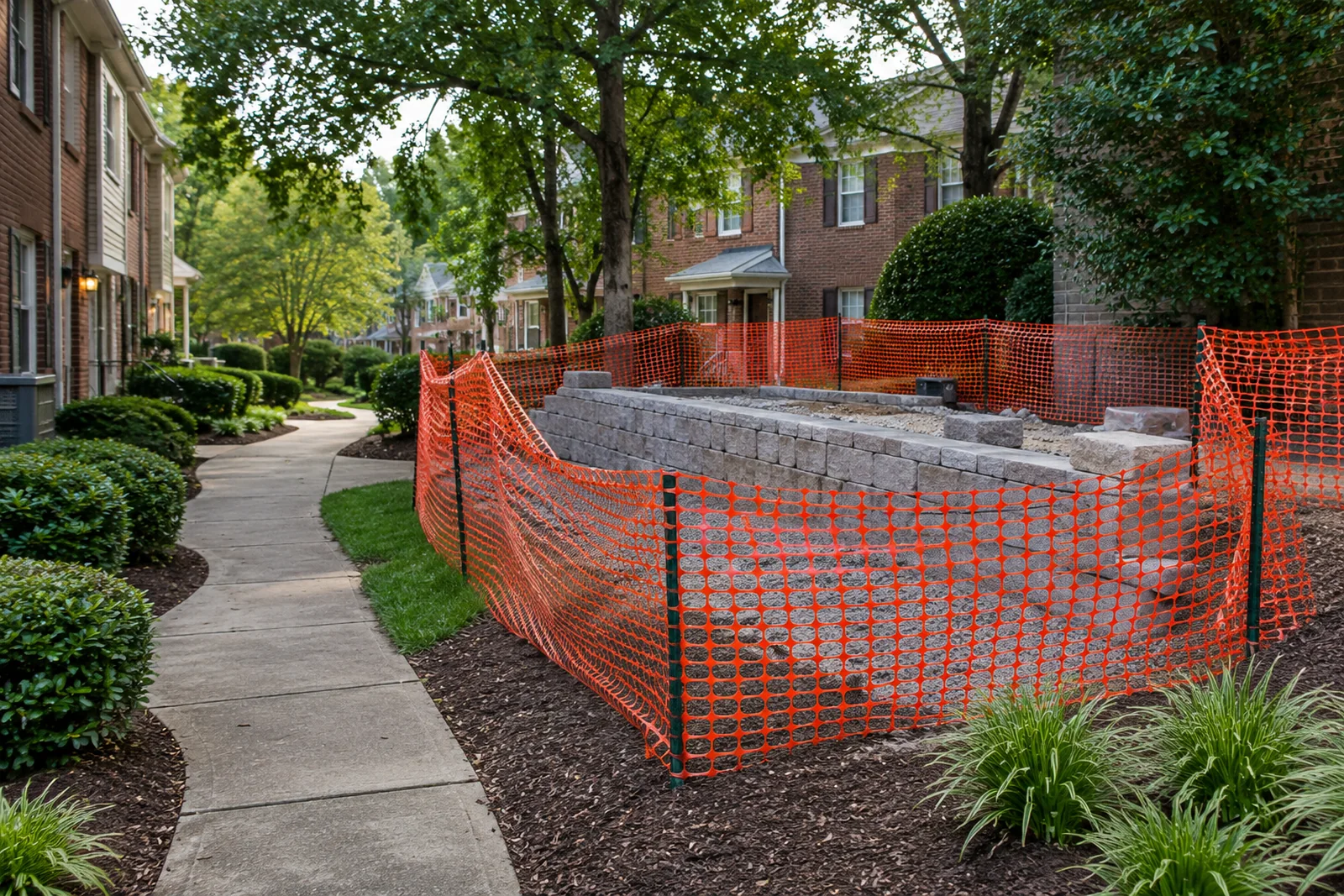
- Notices. Dates and affected areas shared in advance.
- Parking. Temporary spaces arranged when walls border lots.
- Access. Walkways and entrances kept open or clearly rerouted.
- Safety. Work zones fenced, especially around children and pets.
- Restoration. Landscaping and turf restored to community standards.
We usually provide notice text the management company can send, and we keep a single point of contact on our side so residents' questions go to someone who knows the schedule.
Association Approvals, Property Responsibilities & Permits
Community work adds a layer of approvals and questions about who owns which wall. The governing documents decide whether a wall is common area or the owner's responsibility, and replacement materials usually need architectural review. We sort out both before applying for the county permit.
- Responsibility. Governing documents decide whether a wall is common area or owner-maintained.
- Architectural review. Replacement materials approved by the association.
- Permit threshold. The Virginia Uniform Statewide Building Code exempts retaining walls supporting less than three feet of unbalanced fill from permit application. The exemption does not apply where the wall supports a surcharge other than ordinary unbalanced fill.
- Land disturbance. Virginia regulates land-disturbing activity at 10,000 square feet generally and at 2,500 square feet in Chesapeake Bay Preservation Areas, and localities can set lower thresholds.
We confirm current thresholds with the building office for your address before quoting. Detail by jurisdiction is on our permits and requirements page.
HOA & Multifamily Retaining Wall FAQs
Which Richmond-area communities have you assessed the most walls in?
Brandermill and the older sections of Midlothian and Chester, where original 1970s to 1990s walls are reaching the end of their life across many lots at once.
Do you present findings at board meetings?
Yes, when a board wants that. We can walk through the assessment and the phased budget directly with the board.
Can each wall receive its own proposal?
Yes, so boards can approve them separately.
Can work span budget years?
Yes. Programs are commonly phased over several years.
Who handles resident notices?
We provide notice content and dates; management usually sends them.
Can you help with our reserve study?
Our assessment gives costs and timelines the reserve study can use.
Who is responsible for walls on lot lines in Richmond-area communities?
The governing documents decide. We help identify which walls are which.
Request a Free Community Wall Assessment
Each wall gets its own proposal so the board can approve in stages. We measure the site, explain what the ground needs, and give you a written price with every line item shown.
- Every wall rated and priced
- Phased across budget years
- Resident notices handled
- Reserve study support
Serving Richmond, Henrico, Chesterfield and Hanover, plus Petersburg, Hopewell, Colonial Heights, Powhatan, Goochland and Prince George County.