
Grading Contractor Richmond: Rough Grading, Finish Grading & Yard Leveling Services
Rough grading shapes the ground and sets the elevations. Finish grading smooths that shape into a surface ready for grass or landscaping. Most yard projects need both.
- Ground should fall away from the foundation, not toward it
- Low spots are filled or drained so water does not pond
- Fill is compacted in lifts so it does not settle later
- The finished surface is ready for seed, sod or planting
The problems grading fixes are familiar: water running toward the house, puddles that last for days, a lawn too uneven to mow, and the rough, rutted ground left after construction. On new homes in Midlothian, Short Pump and Chester, settled backfill around foundations is one of the most common reasons we are called.
We grade your yard so water leaves it. A level lawn that holds water is a swamp. We set falls that carry rain away from the house and out of the yard, then make it look good.
Is water running the wrong way in your yard?
Contact us today to schedule a free on-site grading estimate. Tell us where water pools and where it comes from.
Planning Cut, Fill, Slopes & Positive Drainage
Good grading starts with elevations. We work out where water should go before any soil moves, set the ground to fall away from your foundation, and balance cut and fill so little soil has to be hauled in or out.
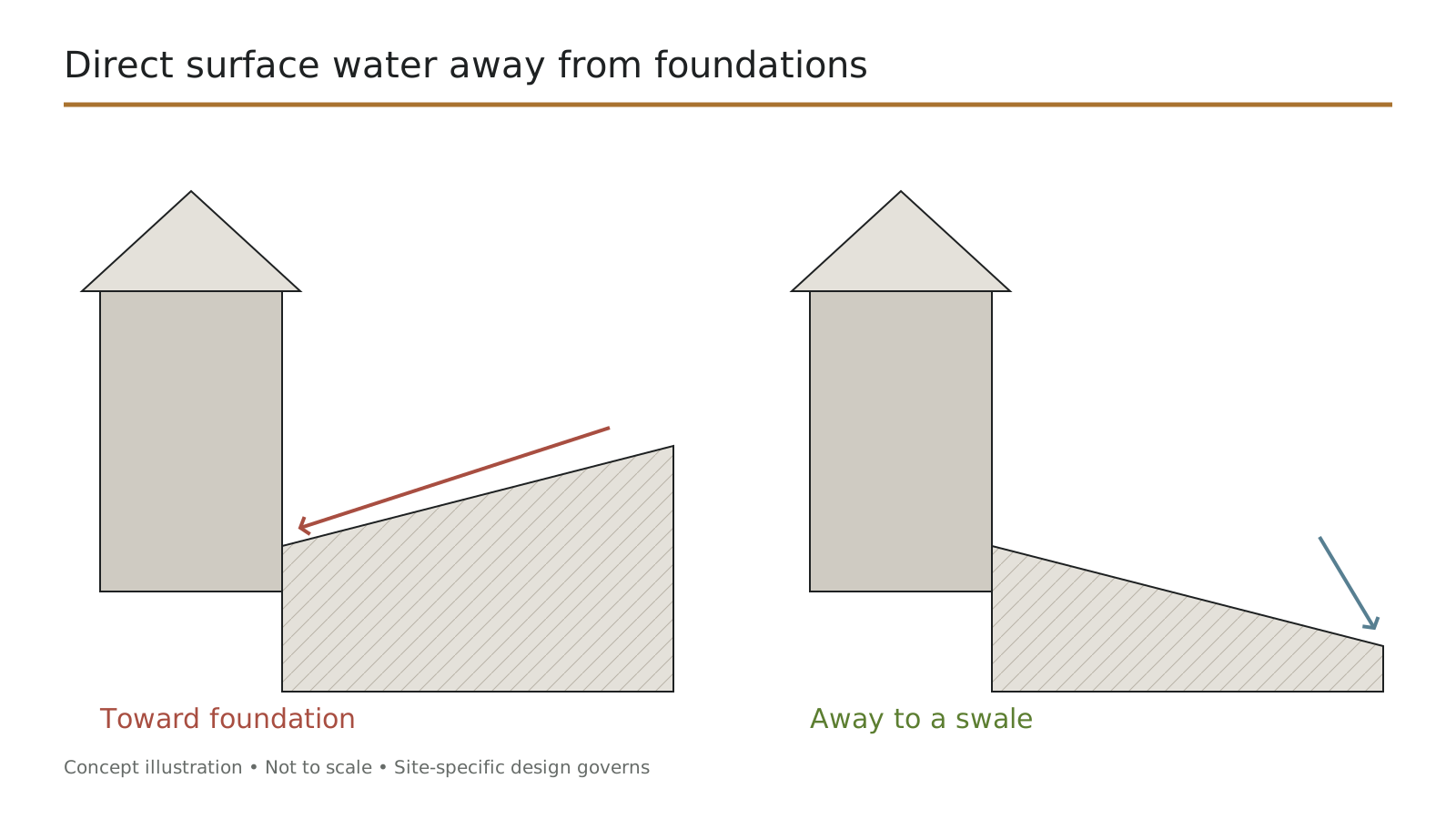
- Positive drainage. The residential code generally requires ground to fall away from foundations. We confirm the local requirement and build to it.
- Cut and fill. High spots cut to fill low ones, balancing soil on site.
- Compaction. Fill placed in thin lifts and compacted to prevent settling.
- Swales. Shallow channels carry water around structures and off the lot.
- Slopes. Kept mowable, or planted or walled where too steep.
- Topsoil. Stripped, stockpiled and replaced so grass grows well.
Settled backfill is the classic Richmond problem. Soil pushed back against a new foundation settles over the first few years, leaving a trough that sends roof water straight to the basement. Regrading with compacted fill and extending downspouts fixes most of these.
Site Grading Costs in Richmond, VA
Straightforward residential regrading is priced by area. Irregular or obstructed sites are priced by time. Topsoil and seed or sod are separate. Downspout extensions are often added at little cost.
| Item | Unit | Planning range | Notes |
|---|---|---|---|
| Regrading | Per sq ft | $0.40 – $2.00 | Open residential yards |
| Grading by time | Per hour with equipment | $95 – $225 | Obstructed sites |
| Topsoil | Per cubic yard, spread | $45 – $85 | Delivered and placed |
| Seed and straw | Per sq ft | $0.15 – $0.40 | Seasonal timing |
| Sod | Per sq ft, installed | $0.90 – $1.80 | Immediate cover |
Planning ranges based on published 2026 national cost averages for comparable work (HomeGuide, HomeAdvisor), not quotes. Last reviewed: September 2026.
Small, medium and large yards
A small regrade along one side of a house is often a single day of work. A full backyard regrade with topsoil and seed runs several days. Large lots and new-construction sites are priced by area and quantity. We show which you are in when we quote.
How We Grade From Stakeout to Final Surface
- 1
Assess water
We trace where water comes from, where it's heading and where it's currently sitting.
- 2
Set elevations
We stake and check the target grades before moving any soil.
- 3
Utility locating
We call Virginia 811 before disturbing the ground.
- 4
Strip topsoil
We strip and save topsoil for reuse wherever we can.
- 5
Rough grade
We cut and fill, compacting in lifts as we go.
- 6
Finish grade
We smooth the surface to its final falls.
- 7
Restore
We put topsoil back down and finish with seed or sod and a straw cover.
Coordinating Topsoil, Seeding, Sod & Landscape Restoration
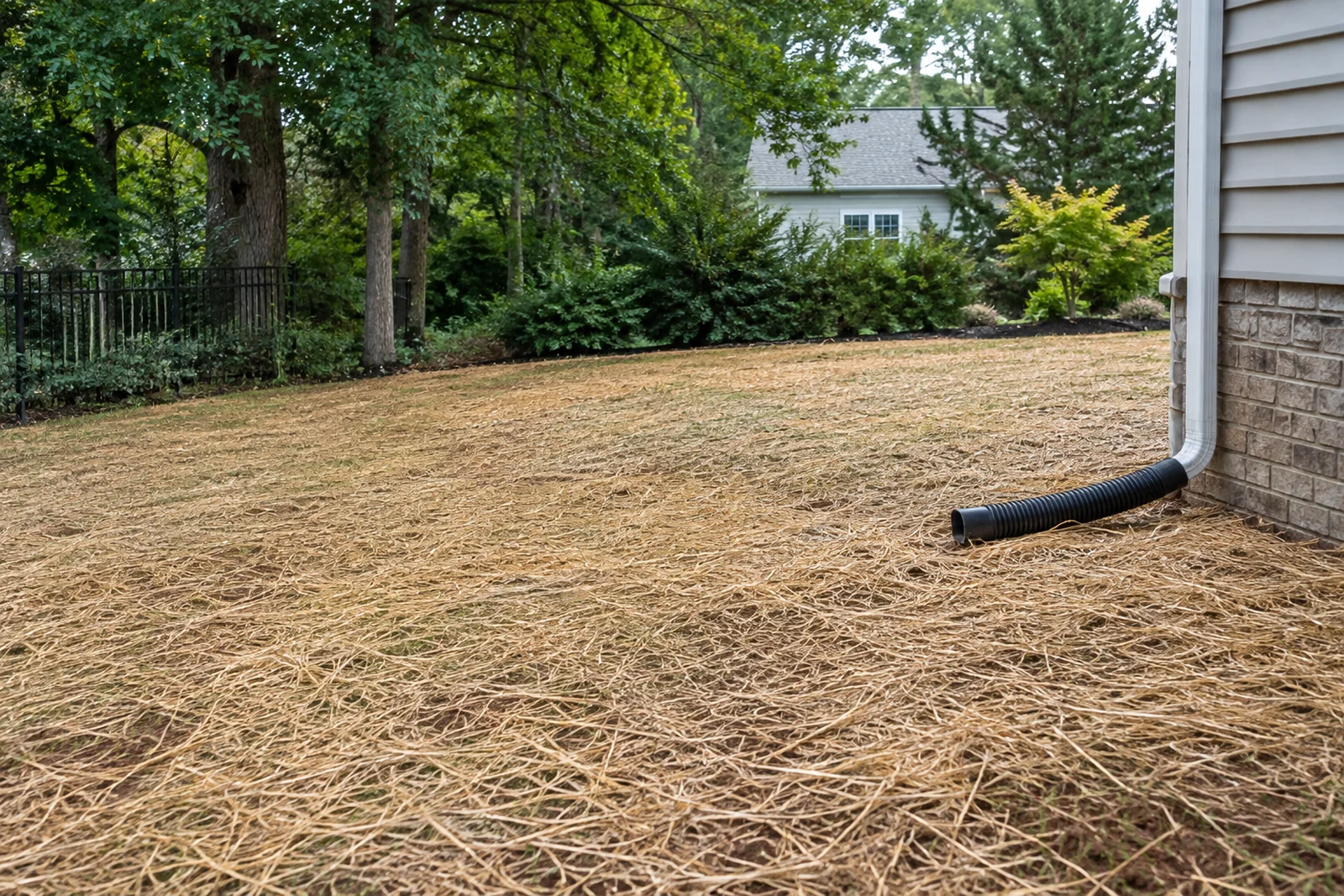
Grading is only finished when something is growing on it. We place topsoil, then seed or sod depending on the season and the slope. Fall is the best time to seed cool-season grass in central Virginia, and sod gives instant cover on steeper ground.
- Seed timing. Fall is the best season for cool-season grass in central Virginia; spring works with more watering.
- Sod. Instant cover, good for slopes and quick results.
- Straw and matting. Protect seed on slopes from washing out.
- Beds. Planting areas shaped and edged with the grade.
- Downspouts. Extended or piped so roof water reaches the new grade.
Richmond summers are hard on new grass. Seeding in late summer or fall gives cool-season grass time to establish before heat returns. If the grading has to happen in summer, sod or temporary cover and a watering plan make the difference.
Grading Permits, Drainage & Land Disturbance Rules in Richmond, VA
Most yard grading is small enough to avoid permits, but a few rules still apply. Larger areas trigger Virginia land disturbance permits, with a lower threshold in Chesapeake Bay Preservation Areas. Water also can't be redirected onto a neighbor's property, so we plan the drainage path first.
- Land disturbance. Virginia regulates land-disturbing activity at 10,000 square feet generally and at 2,500 square feet in Chesapeake Bay Preservation Areas, and localities can set lower thresholds.
- Drainage onto neighbors. Regrading must not concentrate water onto adjacent property.
- Utilities. Virginia 811 notice is required before any excavation. The marking period runs to 7:00 AM on the third working day after notice, and digging within two feet of a mark is done by hand. Private lines to sheds, lights, irrigation and pumps are not marked and have to be identified with the owner.
- Stormwater. Newer developments may have stormwater plans that grading must respect.
We confirm current thresholds with the building office for your address before quoting. Detail by jurisdiction is on our permits and requirements page.
Site Grading FAQs
Is standing water more common on one side of the Richmond metro?
Yes, flat Coastal Plain lots in Sandston and Highland Springs hold water longer than sloped Piedmont lots to the west, simply because there's less fall to work with.
Do you grade around new-construction foundations in Richmond suburbs like Midlothian and Chester?
Yes, settled backfill around newer foundations is one of the most common grading calls we get in those subdivisions.
How much slope do I need away from my house?
The residential code generally sets a minimum fall away from the foundation. We confirm your locality's requirement and grade to it.
Can grading fix a low spot without a drain?
Often, if there is somewhere lower for the water to go.
Will you bring in soil or use what is here?
We balance cut and fill first and import only what is needed.
Do you seed or sod afterward?
Yes, as part of the job or as a separate line.
How long before I can use the yard again?
Sod right away with care; seed takes several weeks to establish.
Request a Free Grading Estimate
We grade for where water should go, then make it look good. We measure the site, explain what the ground needs, and give you a written price with every line item shown.
- Falls away from the house
- Fill compacted in lifts
- Topsoil, seed or sod
- Our own equipment
Serving Richmond, Henrico, Chesterfield and Hanover, plus Petersburg, Hopewell, Colonial Heights, Powhatan, Goochland and Prince George County.